Blast puzzles look simple: press a group of touching pieces, they vanish, the board falls. Underneath, nearly all of them run three separate scoring systems at once, and the difference between a good player and a lucky one is knowing which is paying out.
System one: cluster size, with a curve
Almost no game scores clusters linearly. Clearing five pieces is worth more than clearing five separate pairs, and clearing nine is worth much more than nine times one. The curve is steep enough that waiting a move to grow a group of six into a group of nine is usually correct, even though it feels like wasting a turn.
This is why patient players outscore fast ones in this genre. The board rewards accumulation.
System two: the chain multiplier
When a clear causes another clear without input, most games apply a rising multiplier to each step. The second link is worth more than the first, the third more again. That means the single most valuable move on a board is rarely the biggest group — it is the group whose collapse will drop three of one colour into contact with two more.
Reading that requires looking at the columns above the group, not the group itself. It is the one skill that transfers between every game in this category.
System three: booster stacking
Clear enough pieces at once and you earn a special: a rocket, a bomb, a colour clear. Set two of them adjacent and detonate them together and virtually every game in this genre grants a combined effect far larger than the sum. Studios do not usually document these combinations, and they are the largest single source of score in most blast puzzles.
The practical version: when you make a special, do not use it. Make another one, put them next to each other, then fire.
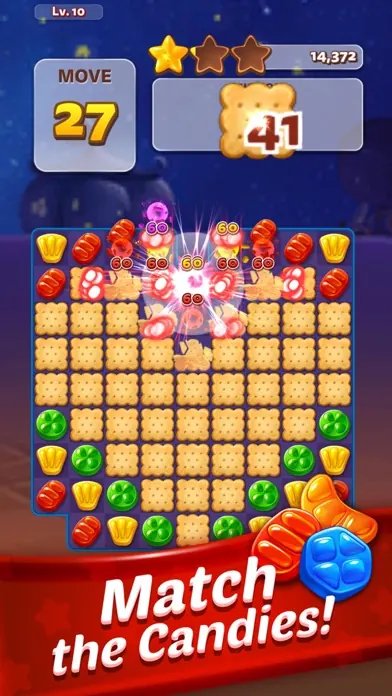
Screenshots from the official Australian store listings. All rights remain with the publishers.
Why levels feel randomly hard
Because the refill is random and the multiplier is not. A board that hands you two specials in the first five moves plays out completely differently from the same board that does not, which is why the same level can take one attempt or eleven. It is not a conspiracy against you; it is variance in a system with a steep reward curve.
Knowing this changes what to do about it. Failing a level three times is information about the refill, not about your ability, and the fix is another attempt rather than a purchase.
What this means for the four games here
The tap-to-clear game rewards system one hardest — grow the blob. The two swap games are mostly about system three, because their boosters combine generously. And the frozen board deliberately keeps chains short, which makes it the most skill-transparent of the four: what you see is roughly what you score.